
Weighing up to 20 pounds, the indri lemur is Madagascar’s largest. Learn about these unusual creatures—and more fauna found nowhere else on Earth—during our new Madagascar's Natural Wonders: Lemurs, Rainforests & Baobabs adventure.
Refer Friends & Earn Cash Rewards—Up to a FREE Trip.
Weighing up to 20 pounds, the indri lemur is Madagascar’s largest. Learn about these unusual creatures—and more fauna found nowhere else on Earth—during our new Madagascar's Natural Wonders: Lemurs, Rainforests & Baobabs adventure.
Question: What percentage of Madagascar’s wildlife is found nowhere else on Earth?
Answer: 90%
It’s difficult to wrap your head around it, but a remarkable 90% of all wildlife on the island of Madagascar is endemic—found nowhere else on Earth. Breaking it down further, 92% of the island’s mammals and 95% of its reptiles are endemic to the island. As if that wasn’t enough, 89% of Madagascar’s plant species are also found nowhere else. How is that even possible?
If you look on a map, Madagascar is plunked in the Indian Ocean about 250 miles east of southern Africa. It’s considered part of the African continent, but it really shouldn’t be. Madagascar was once part of the Indian subcontinent until about 88 million years ago, when it broke off from India and never looked back. Adrift since then, all the native plants and animals in Madagascar evolved in complete isolation. There wasn’t even any human presence on the island until about 1,500 years ago—when initial settlers began arriving in outrigger canoes from Southeast Asia.
Because it’s dwarfed by Africa on a map, Madagascar may not look all that big. But it’s actually the world’s fourth largest island (after Greenland, New Guinea, and Borneo) and is often referred to as a “mini continent.” Its remarkable biodiversity, and range of geography and climate—from lush rainforests and dry deserts to grassy plains—make it one of the few “megadiverse” countries in the world. But it’s all that indigenous flora and fauna that are the real stars of Madagascar.
Madagascar’s breakout homegrown celebrity
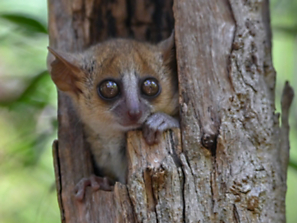
As anyone familiar with the 2005 animated classic Madagascar can tell you, if there’s one animal the island is known for, it’s lemurs. The oldest living primates in the world, lemurs are only found in Madagascar—but it’s not just those ring-tailed ones you always see in pictures. With no mammals as competition, lemurs thrived on the island, evolving into many different shapes and sizes. More than 100 species and subspecies of lemurs call Madagascar home. They range anywhere from an indri lemur tipping the scales at more than 20 pounds to the tiny Madame Berthe’s mouse lemur that hardly moves the needle, weighing in at about an ounce. But if you had visited Madagascar before any humans got there, you might have run into lemurs the size of male gorillas—giving you the impression you took a wrong turn and landed on Skull Island from King Kong.
Chameleons may not be as popular as those tree-swinging primates—maybe because they blend in too much—but Madagascar is also home to half of the world’s 150 species of insect-eating lizards. The world’s largest chameleon, the Parson’s chameleon, which can reach two feet in length, lives in Madagascar; as does the world’s smallest, the Brookesia nana, which is well under an inch. Before the Brookesia nana’s recent discovery, the smallest known chameleon in Madagascar was called the Brookesia micra—also quite tiny, the little guy could perch on the head of a matchstick.
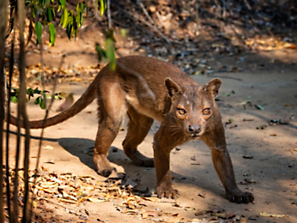
Another interesting character you’ll only find on Madagascar is called the fossa. The largest carnivorous mammal on the island, the fossa has big cat-like paws, a long monkey-like tail, and round weasel-like ears. Closely related to the mongoose, this strange creature can weigh more than 20 pounds and hangs out both on the ground and in the trees. Dedicated carnivores, fossas will snack on a variety of small-sized animals, but guess what their favorite food is? Yep, lemurs ...
This sedentary resident runs rings around the wildlife
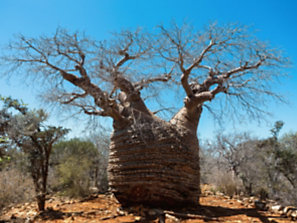
Maybe you saw a baobab tree or two in Tanzania. As impressive as they are, they’re nothing like the ancient giants in Madagascar. Six of the world’s eight species of baobab (Adansonia) are found only in Madagascar (only one species is found in mainland Africa). And Madagascar is home to the most famous of them all, Adansonia grandidieri—the Giant Baobab. The national tree of Madagascar, these towering bad boys soar close to 100 feet high, have massive, cylindrical trunks up to 10 feet across, with a distinctive crown of scraggly branches that explains the creation myths that call it “the tree the gods planted upside down.” And they live more than 1000 years—one in Madagascar, called “grandmother,” is estimated to be 1,600 years old.
Not to end on too much of a down note, but like the rest of the planet, this enchanting island with some of the richest biodiversity in the world is beginning to suffer from the effects of global warming. Thousands of the island’s plants and animals face environmental threats—including the aforementioned lemurs, chameleons, and baobab trees. A recent study in Nature Communications said that if all of Madagascar’s unique mammals died out, it would take another 23 million years for a comparable group of mammals to evolve.
Ten more fascinating facts about Madagascar
Discover both biodiversity and local culture in Madagascar on our new Madagascar's Natural Wonders: Lemurs, Rainforests & Baobabs adventure.
Get The Inside Scoop On...
Like what you see here? Receive weekly updates right in your inbox.
inside-scoopArticles In This Edition

Animal Attraction

Embrace Your Wild Side: Immersions Adventures in Nature

Fowl Play

On Trend: Top 10 Journeys by Land, Sea & River

Protecting the King: Emanuel Munisi on the Future of Lions in Tanzania

Ultimate Australia with Lisa