Catch a glimpse of the ecological and cultural diversity of Costa Rica with Stiven Matute—Trip Experience Leader for our Costa Rica: Wildlife & Tropical Landscapes adventure—from local villages where residents live in harmony with nature, to the curious critters of the rain forest.
When Stiven Matute—an O.A.T. Trip Experience Leader for our Costa Rica: Wildlife & Tropical Landscapes adventure—speaks about Costa Rican nature, his enthusiasm is immediately apparent. "Costa Rica is a small country with great biodiversity," he explained in his video (above), noting that despite representing only "0.03% of the land surface, it holds 6% of the worldwide biodiversity." With an area comparable to West Virginia, this Central American gem packs an astonishing ecological punch.
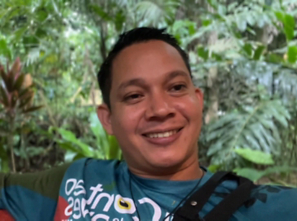
In celebration of Earth Day, we’re highlighting Costa Rica’s biodiversity with Stiven Matute— Trip Experience Leader for our Costa Rica: Wildlife & Tropical Landscapes adventure.
For Stiven, Costa Rica's natural treasures are a source of immense pride. The country's biodiversity encompasses a rich variety of "plants, mammals, reptiles, amphibians, and arthropods in general," creating ecosystems that visitors often describe as magical. But as Stiven is quick to point out, "that is not just Costa Rica"—alongside its forests and wildlife, the country's cultural traditions are just as wondrous.
"The golden bean"
One cornerstone of Costa Rican culture is its deep relationship with coffee, affectionately known as "the golden bean." Coffee cultivation is not only an agricultural practice, but a way of life that has shaped the nation's identity for generations.
"Coffee is present in Costa Rica every morning for breakfast," Stiven said, describing how in earlier times, "coffee was transported in burlap sacks to ports for exportation, transported by oxcarts." These iconic oxcarts, decorated with intricate, colorful designs, have become emblematic of Costa Rica, representing "the hardworking people" who built the country's agricultural economy.
Another key aspect of Costa Rican culture is the festivals and community celebrations. "Once in a while, in a small town in Costa Rica, people celebrate with masquerades in costumes, where they role-play like giants that dance around," Stiven shared. These elaborate masquerades typically "mark the beginning of the parades" during local festivals, continuing traditions that have been passed down through generations.
Stiven also takes particular pleasure in introducing travelers to the artisanal preparation of chocolate, a process deeply rooted in pre-Columbian traditions: "We can delight our palate with tasty chocolate," he said. "With the sound of the grinding rock, it engages you to learn more about it." The traditional process—where "the chocolate is peeled and ground in order to turn it into a very good-looking paste"—creates a sensory experience that connects visitors to ancient foodways. Stiven's simple verdict on the final product: "delicious."
The Bribri people: Stewards of the land.
Among the most meaningful experiences Stiven facilitates is cultural exchange with Costa Rica's indigenous communities, particularly the Bribri people. "One of the things that I enjoy the most is the process of learning their dialect," he shared, describing interactions with Bribri women who demonstrate their traditional language and communication methods.
"An immersion to the culture teaches how the main communication was in the past," Stiven explained. The Bribri are "very skillful people," who show travelers "how they used to communicate without scaring the animals" through remarkable mimicry of animal sounds and calls.
The indigenous hosts take great pride in sharing their heritage with visitors. "They are proudly showing us every single corner of their place and culture," Stiven observed, highlighting the Learning & Discovery opportunities that form a cornerstone of the O.A.T. experience in Costa Rica.
Nighttime wildlife encounters
For many travelers, Costa Rica's spectacular wildlife represents the pinnacle of their journey. Stiven's enthusiasm peaks when leading night excursions to discover creatures that emerge after dark.
"Tonight, we're going to go on a night excursion. I'm going to show you some of the animals that we're going to get to see in the dark," he said, describing one such adventure where a distinctive sound caught his attention. "It was a red-eyed tree frog, one of the most beautiful frogs in Costa Rica."
Stiven's knowledge of local ecology adds depth to these wildlife encounters. "During the rainy season, it's common that tree frogs mate and lay eggs on the leaves above the water," he explained, adding poetically that "the synonym of rainy season is life."
Pura Vida
As Earth Day reminds us of our responsibility to protect our planet's precious ecosystems, Stiven's work exemplifies how sustainable tourism can foster greater appreciation for biodiversity and cultural heritage. Through his eyes, travelers gain not just memories but a deeper understanding of what Costa Ricans call "Pura Vida"—the pure life that emerges when humans live in harmony with nature.
"That was a very small demonstration of Costa Rica and also of the things that I like the most," Stiven concluded at the end of his video journey. For O.A.T. travelers fortunate enough to explore Costa Rica with Stiven on our Costa Rica: Wildlife & Tropical Landscapes adventure, the demonstration continues in person.
Embark on our Costa Rica: Wildlife & Tropical Landscapes adventure to appreciate the brilliant biodiversity and cultural heritage of Costa Rica.


