
The final stage of this year’s Tour de France reaches its grand finale in Paris on July 26. Explore the French capital with O.A.T. during French Impressions: From the Loire Valley to Lyon & Paris.
Refer Friends & Earn Cash Rewards—Up to a FREE Trip.
The final stage of this year’s Tour de France reaches its grand finale in Paris on July 26. Explore the French capital with O.A.T. during French Impressions: From the Loire Valley to Lyon & Paris.
Narrow winding roads can be found throughout the hills and valleys of the French countryside. Although usually quiet, you may find a few cars passing here and there. Steeper sections that zigzag up mountains, allowing captivating views from the cliffs, are seldom used. That is, unless you are there in the sweltering month of July. The somewhat unremarkable roads turn into the magnificent opportunity of daring focus, mental fortitude, and unmatched athletic grandeur. With thousands of fans from all over the world, the world’s top endurance athletes will take on one of the most challenging feats in the history of sport—the Tour de France.
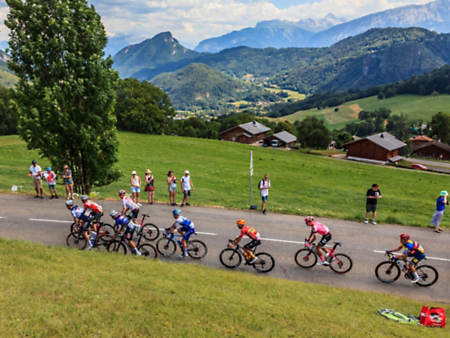
With decades of prestige, the Tour de France has risen to one of the most anticipated athletic events every year. Starting in early July with the Grand Départ, just under 200 cyclists (split between 23 teams) will take on the grueling 23-day endeavor, consisting of 21 days of racing (usually 4-5 hours each) and only 2 rest days. In a seemingly masochistic way, the route goes over multiple “mountain stages,” which can cover thousands of feet in elevation. Any athlete who wants a chance to win must be able to have the aerobic engine to stay competitive on these mountain stages but also needs the fast-twitch edge to attack and hang on to the faster moments.
Although the Tour mainly appeals to cycling fans, it’s a fantastic opportunity to discover more of France’s, and even Europe’s, lesser-known gems. Continuing a more recent tradition, the Tour will start outside of France. In the past, riders have gotten the chance to compete in Italy, Germany, Belgium, the Netherlands, and even Ireland. This year, the Grand Depart will be hosted in Barcelona, Spain’s vibrant coastal city.
As part of the Tour de France since 1957 and most recently included in 2009, Barcelona has been a consistent host of national and international sporting events, especially Spain’s own cycling tour, the Vuelta de Espana. The premiere stage of the 2026 Tour de France will take the riders along the iconic seaside streets and finish with a climb up to the Montjuïc Olympic Stadium. The second stage will also end in Barcelona but takes a different route with the start being in the historic city of Tarragona, home to archaeological ruins that have been certified as a UNESCO World Heritage Site. The course will again provide pleasant views of Mediterranean Sea as it snakes along through Sitges (known as the Spanish Saint-Tropez) and finishes with a notable elevation gain to the Montjuïc Castle.
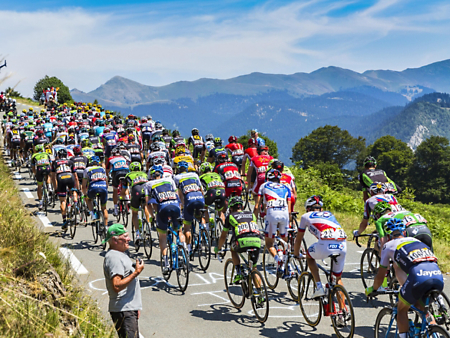
Stage 3 will include the border crossing from Spain into France, ending in Les Angles, and sets up stage 4 for a start in Carcassonne. Nestled in the Languedoc region of south France, Carcassonne is a step back in time with remarkably well-preserved medieval architecture surrounded by classic, red-roofed buildings and picturesque bridges. Although a seemingly insignificant part of the nearly month-long race, Carcassonne offers a clear example of what the Tour offers outside of competitive cycling.
It gives smaller French towns and cities the chance to host athletes and fans alike, and share their cuisine, traditions, and story under the giant spotlight of the Tour de France. As riders fly alongside La Cite (Carcassonne's famous medieval citadel), the city gains so much more than they provide with a few blocked off streets.
Carcassonne is not the only hidden gem that will benefit from this international lens. The seventh stage will take athletes through the port city and world-renowned wine capital of Bordeaux. After Paris, this vibrant destination holds the second most registered monuments in France. Stage 11 will end in Nevers, once a Roman settlement founded by Julius Caesar on the banks of the Loire. As riders continue through the historic country, they will enjoy sights and stories from over 20 unique towns and cities.
Although local culture and architecture have their fame during the Tour, the stark geography throughout France often steals the show—namely, the quiet, daunting roads along the edge of the Alps. The Tour de France has long been known for its mountain stages. One of the most famous of them all and key stage on every rider’s calendar is the Alpe d’Huez. Appearing for the first time in 1952, the iconic stage has now become a symbol of the unbelievable grit and perseverance required by these athletes. The climb follows 21 bends in the road with average grade of 8% that results in over 5400 meters of elevation gain.
After 20 days of racing, the results are virtually set in stone by the time the final stage comes around. The last day of riding is more celebratory than anything. The world’s best cyclists enjoy their final cruise to the center of Paris where the iconic Champs Elysees is packed full of fans. In fact, most teams agree to a truce in the last stage and spend the stage posing for pictures, grabbing a glass of champagne, and enjoying the accomplishment of finishing of the greatest athletic feats in modern history.
As this year’s edition of the Tour begins, some of the world’s best endurance athletes will take to the back roads of France in what would seem like an expertly designed trip around the country if it wasn’t for the intense physical demand required. From the medieval castles to soaring mountains, these riders will see more of France of in a month than most ever do. On your next trip to this European gem, some of the best discoveries may come from following in the footsteps, or tire tracks, of a professional cyclist.
Explore France by both city and countryside during French Impressions: From the Loire Valley to Lyon & Paris.
City of Light, City of Games: Edward’s Olympic Summer in Paris
A Grand Circle Cruise Line Program Director trades his usual Seine River tours for an extraordinary adventure as a volunteer at the Paris 2024 Olympics, offering a unique insider's perspective on how the Games are transforming the City of Light.
Where in the World?
Where in the world can you find this "ghost village," intentionally left uninhabited as a reminder of a bloody massacre that took place during WWII?
The Island That Can't Make Up Its Mind
A tiny river island between Spain and France has been peacefully switching nationalities every six months for over 350 years.
Get The Inside Scoop On...
Like what you see here? Receive weekly updates right in your inbox.
inside-scoopArticles In This Edition

Finns to the Finish

Going Wild in Costa Rica

Grappling for the Gods

NEW Active, 8- to 12-Day Immersions Adventures for 2027

Travel Guide from the World’s Best: Destinations from the Tour de France

War Games