
Travelers on our Back Roads of Iberia: Spanish Paradores & Portuguese Pousadas adventure will taste talha from (occasionally explosive) clay vessels—a winemaking method that derives from ancient Roman times.
Refer Friends & Earn Cash Rewards—Up to a FREE Trip.
Deep in Portugal's sun-drenched Alentejo region, an extraordinary winemaking tradition has survived virtually unchanged since Roman times—and it's literally explosive. Here, wine is still crafted in massive clay vessels called talhas, a process so authentic to its ancient roots that it carries the same nail-biting risks as it did two millennia ago. These enormous clay amphorae can hold up to 2,000 liters of fermenting grape must, but they're notorious for occasionally going kaboom under fermentation pressure.
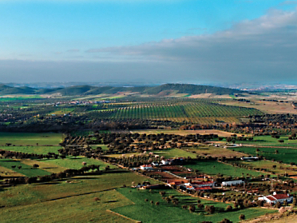
A landscape from Alentejo, south of Portugal, which travelers will journey through during O.A.T.’s Back Roads of Iberia: Spanish Paradores & Portuguese Pousadas adventure.
The risk is so well-known that traditional wineries include what can only be described as viticultural insurance: a safety feature called a "ladrão" (literally meaning "thief")—a buried talha positioned to catch precious wine if any vessels decide to spectacularly self-destruct during the volatile fermentation process. (Because nothing says "authentic winemaking experience" quite like the possibility of your entire vintage literally blowing up in your face.)
What makes talha winemaking so remarkable is its stubborn refusal to modernize. The techniques described by Roman engineers over two thousand years ago remain largely identical to those practiced today.
Blast from the past
The talha tradition represents one of Europe's oldest continuous winemaking practices, serving as a living link to Roman engineers who first brought these techniques to Iberian shores. However, this ancient method might have even deeper roots—some historians believe vinho de talha reached Alentejo via the Phoenicians, which would make this tradition nearly 3,000 years old. That's older than most civilizations.
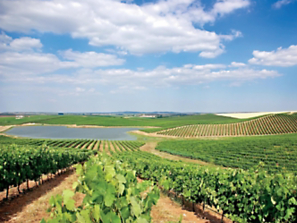
The rich soils of Portugal’s Alentejo region have been growing wine for millennia.
As aforementioned, the techniques remain remarkably unchanged from antiquity, which is either charmingly traditional or mildly concerning, depending on your perspective. Grapes are still crushed by foot—the original "artisanal crush"—often directly on specially constructed slanted floors that channel the must into waiting clay vessels. The fermentation process requires constant vigilance, with workers stirring the must manually with wooden paddles at least twice daily, even through the night (otherwise, yes, kaboom).
Unlike modern winemaking with its stainless-steel tanks and temperature controls, talha production embraces the unpredictability that comes with ancient methods. It's the viticultural equivalent of extreme sports—all the thrill, with the added bonus of potentially delicious results. The semi-permeable clay allows for subtle micro-oxygenation while imparting mineral characteristics that reflect the specific soil from which each vessel was made. In more technical terms, the porous nature of clay creates a unique "terroir"—the concept describing how wine's character is shaped by environment, including soil, climate, and local traditions.
Clay day
Each talha vessel is unique, shaped by regional pottery traditions that give them distinctive characteristics and (presumably) varying degrees of structural integrity. Those from Cuba are known for their turnip-like bulge, while talhas from Vila Alva resemble a child's spinning top. The vessels from Vidigueira are prized for their elegant curves, and those from São Pedro do Corval are renowned for being made from the finest clay with the lowest limestone content.
Before use, each talha must undergo "pesga"—something between a spa treatment and a medieval torture technique. The porous clay interior is coated with heated pine resin called "pez louro" through a process that involves turning the massive vessels upside down over fires, heating them to extreme temperatures, then carefully applying the resin coating while the clay is hot.
Unfortunately, the specific techniques for making traditional wine talhas have been lost for over 100 years. While pottery continues in places like São Pedro do Corval, which boasts about 35 potteries, the exact methods for firing the massive wine vessels are no longer precisely known. Master craftsmen called "pesgadores"—who specialize in coating talhas with pine resin—have almost completely disappeared. Apparently being a professional vessel-exploding-prevention specialist isn't the stable career path it once was.
"It's five o’clock somewhere"
Saint Martin's Day on November 11th marks the traditional "opening of the talha," when fermented wine is first tasted after months of aging with grape solids. This celebration is so anticipated that taverns and wineries often run out of their entire year's production within weeks of the opening. Meanwhile, the coating process itself has become such a rare event that families now organize pig roasts and community gatherings whenever it takes place.
Thousands of private homes throughout the Alentejo still maintain their own talhas, continuing a practice called "rabisco das uvas," where families make wine from grapes left behind after commercial harvests. Some vintners historically added a few raisins or grains of rice to bottled talha wine to create a second fermentation, giving the wine a subtle sparkle when enjoyed the following spring.
Modern revival
These wines were once widespread in Alentejo until the 1950s cooperatives ended the practice among commercial producers, who decided that reliable, non-exploding wine production might be preferable for business purposes. However, modern wineries are rediscovering talha techniques, recognizing that these ancient clay vessels produce wines with character and complexity impossible to achieve through contemporary methods. Talha wine is now helping boost poor villages' economies by attracting wine tourism and commanding premium prices for this artisanal product.
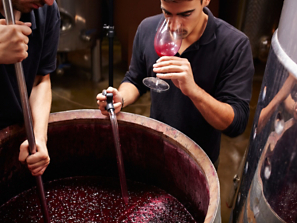
Fermenting wine in barrels is a much more typical (and less dangerous) winemaking method versus talha.
In an age of stainless steel and temperature-controlled fermentation, the explosive risks and manual labor of talha winemaking might seem primitive. Yet for those who taste the resulting wines—with their distinctive earthy complexity and profound connection to place—the ancient methods prove that sometimes the oldest ways remain the best.
Visit a Tahla winery in Évora—the capital of Portugal’s Alentejo region—during O.A.T.’s Back Roads of Iberia: Spanish Paradores & Portuguese Pousadas adventure.
When Getting There was Half the Fun: The Golden Age of Ocean Travel
Before the advent of planes made intercontinental voyages more accessible, there was a golden age of maritime travel—and the RMS Titanic was a grand manifestation of it.
What Did Ancient Rome Look Like?
What did ancient Rome actually look like during its height in the first and second centuries AD, when the city was home to over a million residents and the heart of an empire spanning three continents?
Pompeii Redux: The Dead Still Have Stories to Tell
Exciting new discoveries in Pompeii, Italy, reveal that the dead still have stories to tell.
Get The Inside Scoop On...
Like what you see here? Receive weekly updates right in your inbox.
inside-scoopArticles In This Edition

Heavenly Valley

Talha Winemaking: Portugal's "Explosive" & Ancient Tradition

Where in the World?

World's "Most Beautiful Destinations" You Can Visit on 10 of O.A.T.'s Most Popular Adventures

Writings from Malta