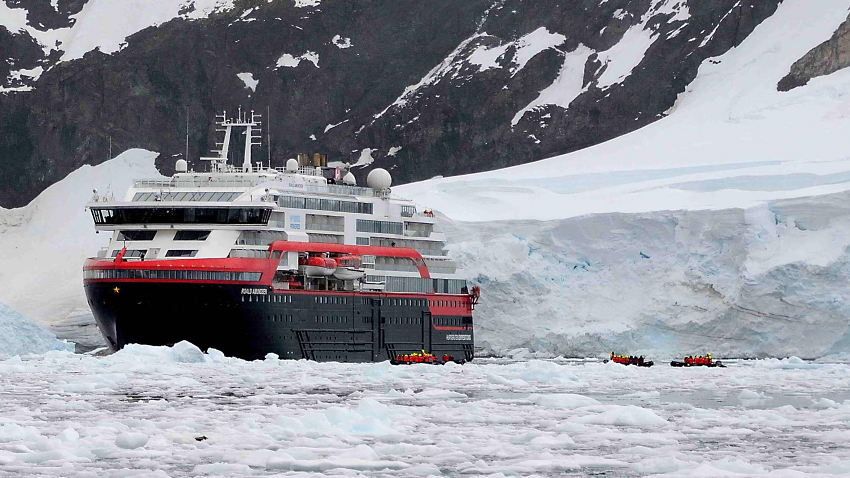
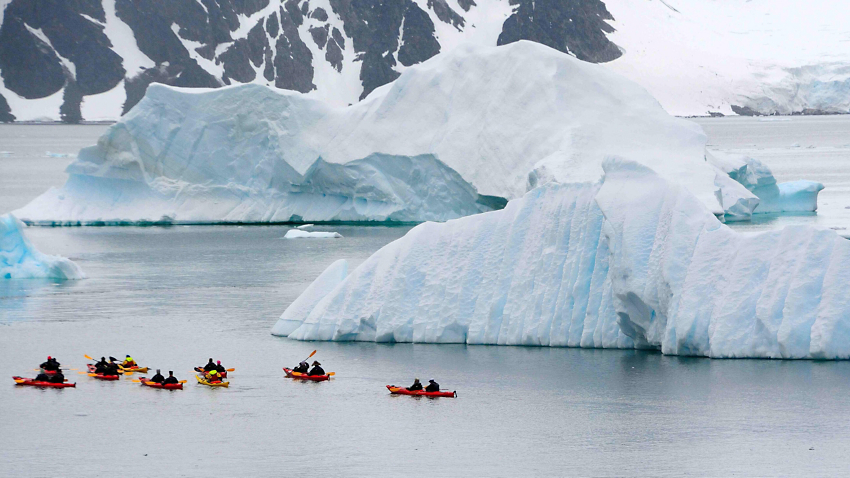
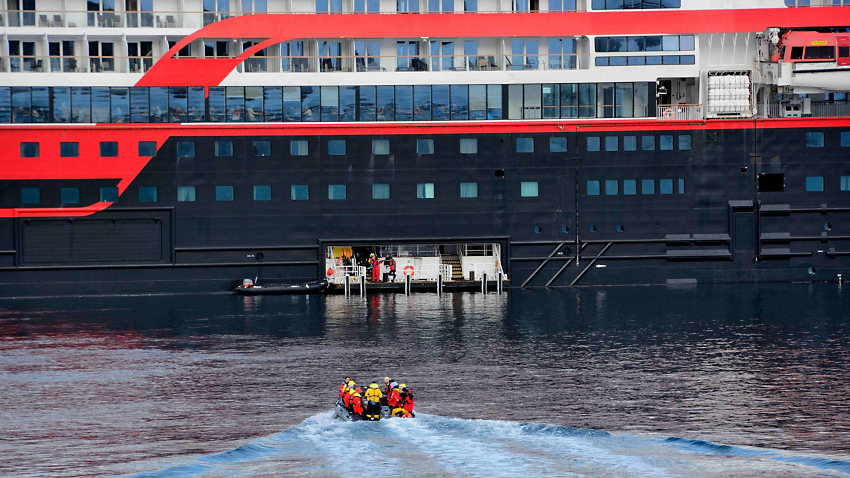
Howard had a bird’s eye view as his fellow travelers explored Port Charcot on Booth Island, Antarctica, during O.A.T.’s Antarctic Circle Expedition: Journey through Antarctica adventure.
Refer Friends & Earn Cash Rewards—Up to a FREE Trip.
Howard had a bird’s eye view as his fellow travelers explored Port Charcot on Booth Island, Antarctica, during O.A.T.’s Antarctic Circle Expedition: Journey through Antarctica adventure.
By Howard Axelrod, 34-time traveler from Ashland, MA
The world I see is monochrome—black and white. Like black and white photos and movies, however, for me the landscape I am viewing evokes a deep and palpable range of emotions. My mind has no context for what I am seeing. Have I landed on the moon? Mars perhaps? Stumbled into an episode of Twilight Zone? The occasional flash of red or pink from the bill or foot of an animal and a patch of yellow or green moss here and there provides some contrast, but I am still perplexed. Large pieces of floating ice glow with an eerie science fiction blue. What I am viewing is mysterious and unknown to me. I gaze on in amazement. I search my mind for references to explain this but come up empty. Where am I?
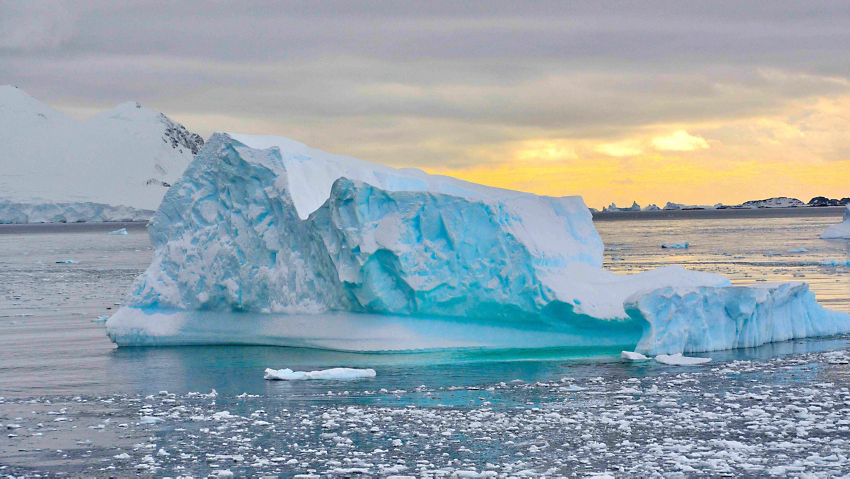
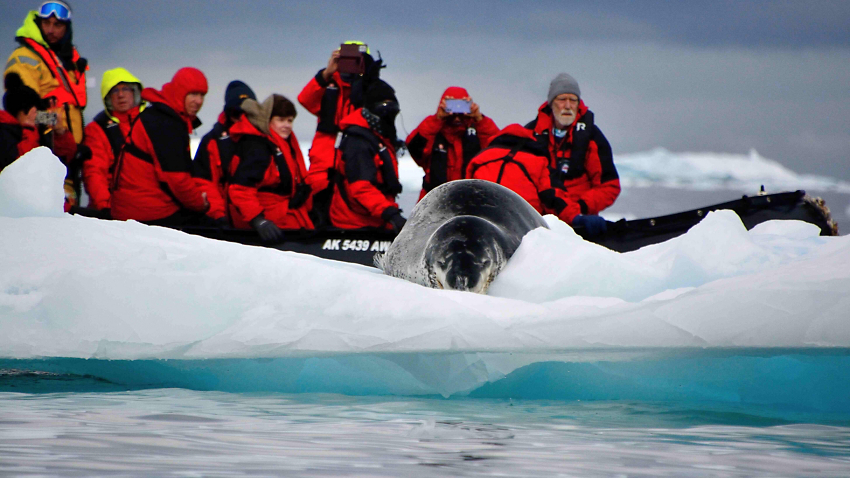
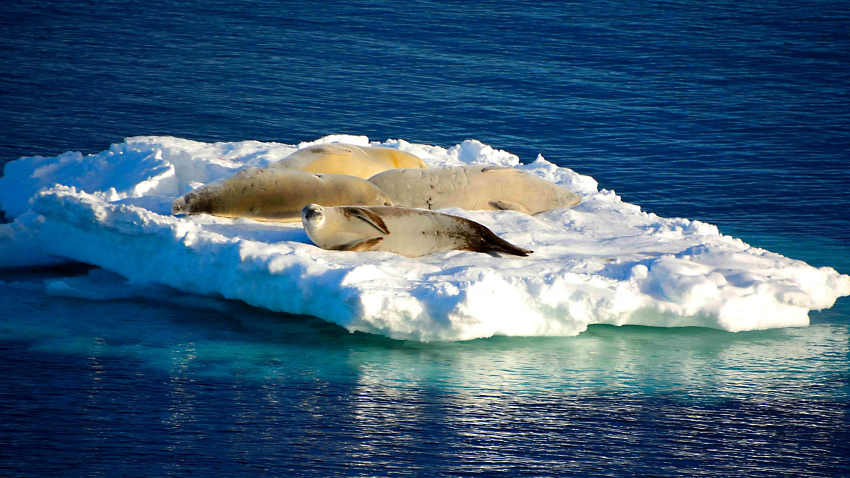
I am brought back to the "here and now" by the thunderous roar of an avalanche carrying tons of snow and ice down the side of a mountain. This is my first clue. Then an ice mass with an electric-blue hue floats by where seals are asleep. This is my second clue. The lightbulb goes on. After a two-day intercontinental ocean voyage across the Drake Passage from Ushuaia, Argentina at the southernmost tip of South America, I have arrived on the seventh continent—Antarctica—the geographic bottom of the world. I am not on a cruise, but an expedition. I am not a tourist, but a traveler. In the days that lie ahead I will become an explorer—of both Antarctica, and in many ways myself. For the moment, however, I am a stranger in a strange land.
In the fourth century BC the Greek philosopher and polymath Aristotle theorized that the earth had polar symmetry, and that the upper landmass of the northern hemisphere was balanced and stabilized by a similar landmass at the southern part of the globe. Later, this unexplored and unproven area became known as "Terra Australis Incognita" (the unknown land of the south). Until the mid-19th century this "seventh continent" had not seen a human footprint for over thirty-five million years. It is the coldest, driest, and windiest place on earth, and has taken the life of many early explorers. I am here in the Antarctic summer, and it is not unbearably cold. In winter however, it can dip to 75 degrees below zero on a regular basis. The Eastern Antarctic Plateau in fact has recorded temperatures of 128 degrees below zero (not a typo)!
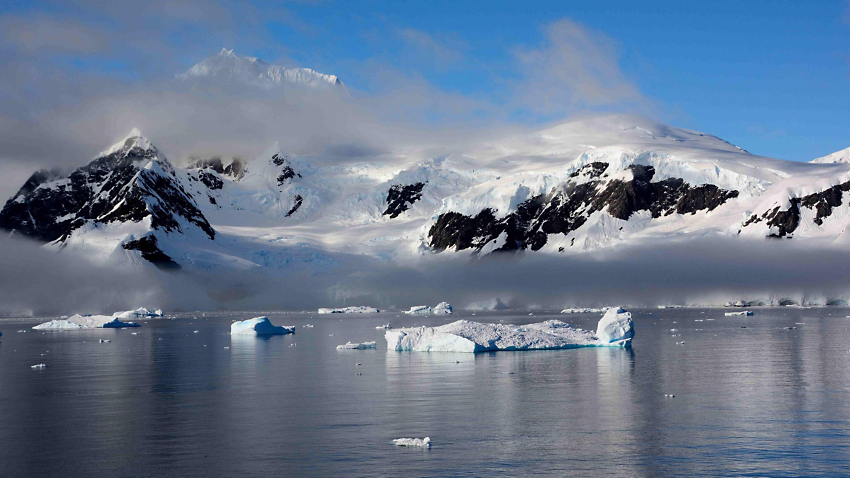
Although I have travelled to ninety-seven countries, I have neither seen nor experienced anything like this. It is a black and white wilderness—harsh, unforgiving, and driven by the unimaginably powerful and unpredictable forces of nature, yet remarkably beautiful, silent, serene, and teeming with a biodiverse ecosystem of unique wildlife. The silence may be broken from time to time by the thunderous roar of an avalanche, or the gunshot-like sound of glaciers the size of cities "calving" ice chunks the size of buildings into the sea.
When I travel, I enjoy the sounds of different languages, different dress, customs, and religions, the smell and tastes of different foods, the architecture, and the bustle of souks and markets. You will find none of this here. Antarctica touches the senses in a different but no less powerful or satisfying way—visually, emotionally, and spiritually. There are mountains here over 16,000 feet high and oceans over 24,000 feet deep! The scale is difficult for the mind to grasp. The air is cool, crisp, and clean. There is no fishing, whaling, hunting, drilling, manufacturing, or mining here. There are no people, streets, houses, buildings, or stores. There is only the immeasurably unique continent of Antarctica, and absolutely nothing else.
Antarctica is an untouched ecosystem, arguably the most pristine on earth. Regulations are in place to assure that this remains the case. Our clothing and backpacks were meticulously vacuumed at the time of boarding our expedition ship so that absolutely no non-native organisms are introduced to the land. Expedition boots and walking sticks are thoroughly scrubbed and dipped in sanitizing solution before and after each shore landing. Nothing other than your sanitized boots and hiking stick can touch the ground.
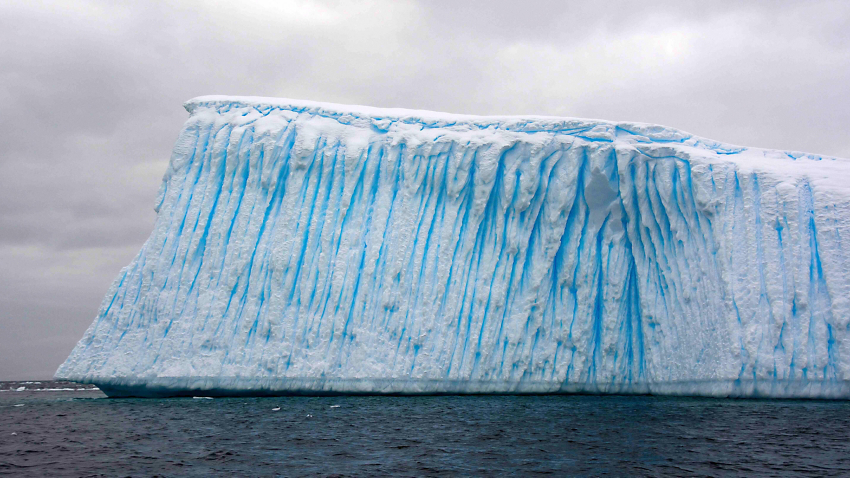
The icebergs and glaciers glow with an unimaginable blue that challenges the mind. One sees the surrealistic color of "pure glacier ice" which has the chemical properties of minerals. Like gemstones, it reflects and amplifies the blue wavelengths of the light spectrum. Your mind struggles to accept this. It does not look real, but is.
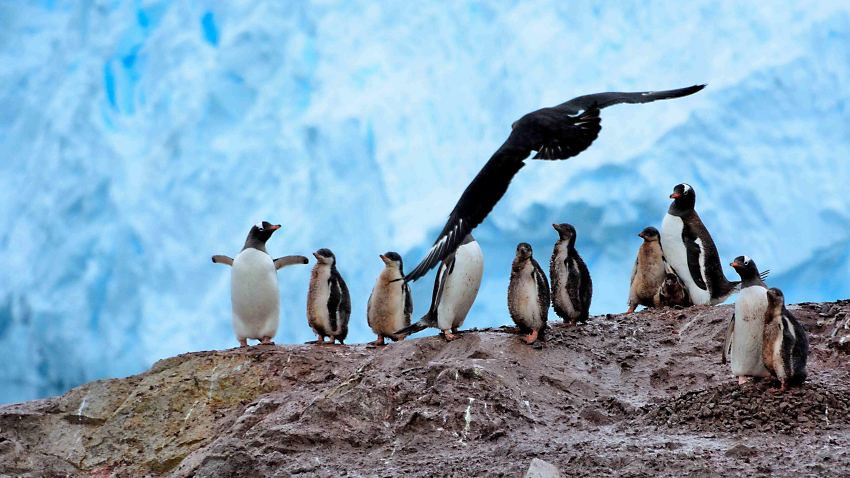
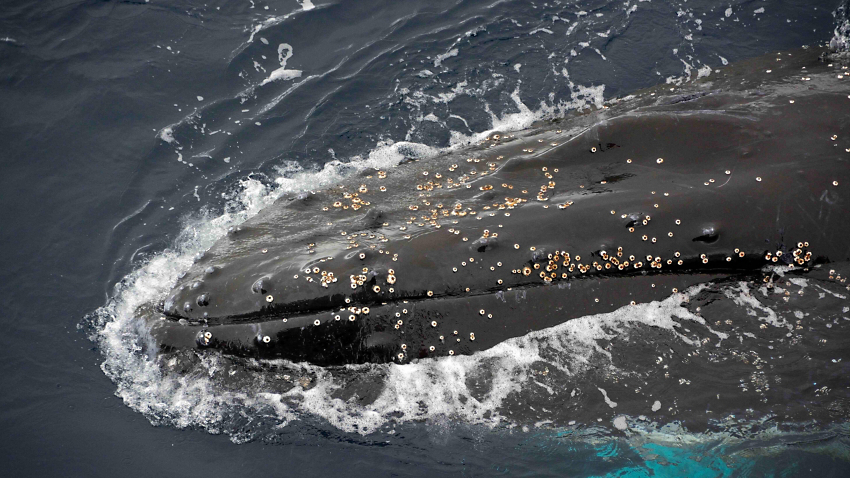
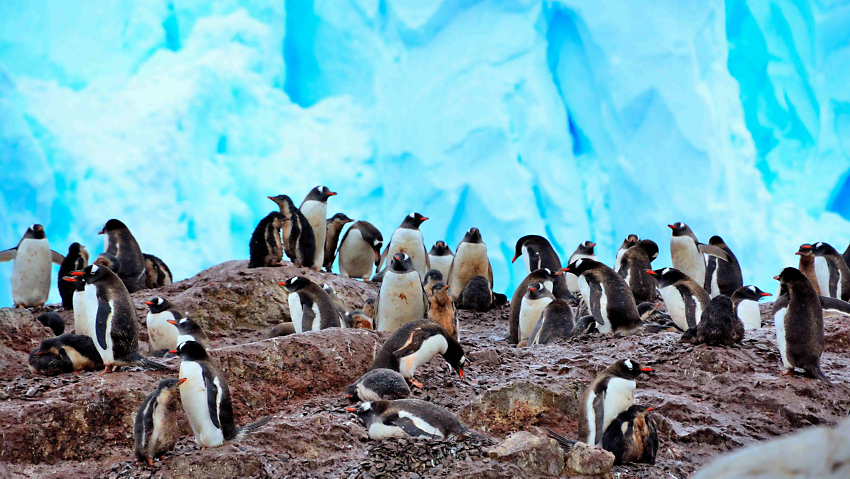
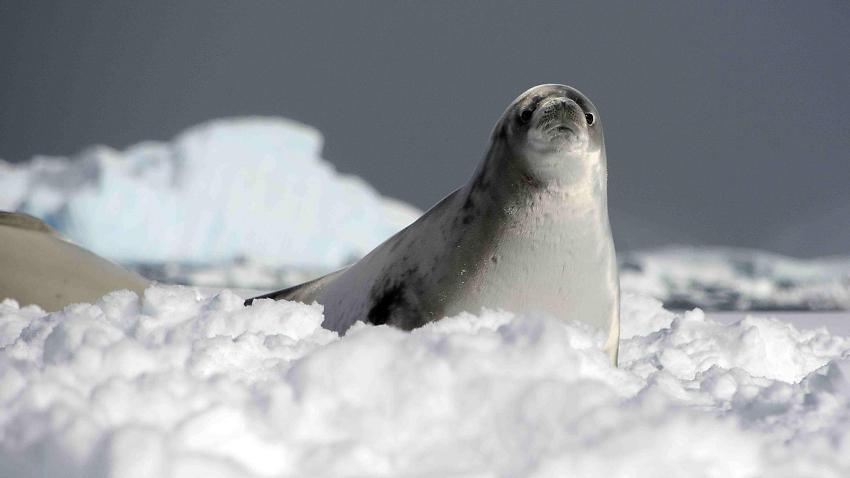
Antarctica is a continent of superlatives. There is so much in this white wilderness that challenges the mind, especially the abundance of wildlife. I saw humpback whales whose weight can exceed 30 tons, yet eat only shrimp-like crustaceans known as krill, which are less than two inches in length. Migratory birds, seals, and penguins of numerous species thrive in large groups. Despite the extreme harshness of this continent, an entire taxonomy of wildlife has evolved through a variety of physiological and behavioral adaptations to survive and flourish. It is a place that Charles Darwin would have loved. Nature is untouched and in complete balance. Little has changed on the white continent for tens of millions of years. I doubt that there is any other place on earth where this is so. It is a unique unspoiled land of striking contrasts and unimaginable beauty. You can touch the silence inside your soul here.
It is rare that I have difficulty describing in writing what I see and feel when I travel, but Antarctica is an exception. For me it is a place that defies words. Perhaps the expression that "a picture is worth a thousand words" applies. My photographs may tell the story better than my words.
Howard Axelrod is an Ashland, MA resident, travel photographer, writer, and former high technology executive. He has photographed in 97 countries on all seven continents and has travelled to 42 of the U.S states
See if you can find words to describe the bottom of the Earth when you join O.A.T. for Antarctic Circle Expedition: Journey through Antarctica.
The White Wonderment of Antarctica
Voyage through the Drake Passage to Antarctica with this traveler and explore the unspoiled wilderness.
Third Time’s the Charm
This traveler may have run into some unpredictable challenges while trying to reach his 7th continent but that didn’t stop him.
Travel as a Teacher
Read about one traveler’s charming tradition that serves as an unexpected teaching tool for students.
Get The Inside Scoop On...
Like what you see here? Receive weekly updates right in your inbox.
inside-scoopArticles In This Edition

10 Years in Review: O.A.T.’s Photo Contest Grand Prize Winners

Through the Lens: Inside a Foundation Journey in East Africa

Top 10: O.A.T. Adventures for Nature Photographers

A Visit to the Bottom of the World

Photo Op

Where in the World?