
Of Magellan's original fleet of ships that anchored in the lands explored on our The Wilderness Beyond: Patagonia, Tierra del Fuego & the Chilean Fjords adventure, only his flagship Trinidad returned to Spain—without Magellan himself onboard.
Question: Who was the real first person to circumnavigate the globe? (Hint: The answer might surprise you!)
Answer: Enrique of Malacca … maybe.
When the crew of Ferdinand Magellan’s ship Trinidad finally dropped anchor in Spain in 1522, three years after it first set sail, only four of the original sailors remained (and only 18 of all 250 who joined the voyage over time). They were heralded as the first to ever fully circumnavigate the globe. But Magellan was not among them.
Magellan had been killed in a deadly battle in the Philippines, slaughtered while his men watched helplessly. His voyage was completed by Juan Sebastian Elcano, a man so heartless that he ditched two of the original three ships and dozens of his own crew along the way. Though history does not actually record in which order the survivors went ashore, Elcano got bragging rights as the first returned.
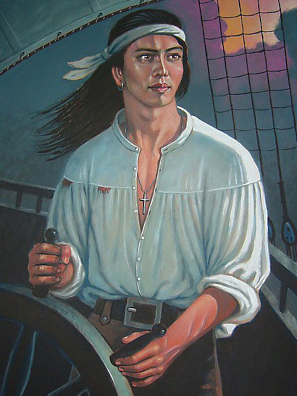
While there’s no proof that Enrique was first to circumnavigate the globe, there’s no proof that he wasn’t, either.
But was he? There was a fifth survivor of the original crew, the translator Enrique of Malacca, who lived but didn’t return to Spain. Where he did end up is the heart of the debate.
A Filipino enslaved and sold in the markets of Malacca, Enrique (who could speak Malay, as well as regional languages of Sumatra and the Philippines) was pressed into service as a translator as a teenager. Magellan promised the young man that if he completed the Spice Islands voyage, he would be freed. After Magellan was killed and dismembered in the battle of Mactan in the spring of 1521, Enrique assumed he would be released as promised. When Elcano reneged on the deal, Enrique took matters into his own hands (see below) and freed himself.
If Enrique was in fact from the Philippines, he was at that moment already the first to circumnavigate the globe. If, instead, he was of Filipino descent but had been born in Malaysia, it would require one last leg—Cebu back to Malacca—to complete the journey. The diarist aboard the Trinidad suggests that Enrique set off for Malaysia in May of that year, a 1,500-mile straight shot across the South China Sea. He would have arrived long before Elcano’s crew made their journey—more than four times as long—back to Spain.
It’s not like Enrique could have sent a telegram saying he made it, so we’ll never know for sure. But Malaysia has no doubts: it has erected a statue of him in the Maritime Museum of Malacca.
Don’t Mess with Enrique: Massacre at Cebu
Follow in the footsteps of Enrique, Magellan, and countless explorers as you discover The Wilderness Beyond: Patagonia, Tierra del Fuego & the Chilean Fjords.
Get The Inside Scoop On...
Like what you see here? Receive weekly updates right in your inbox.
Articles In This Edition


